Monday, September 26, 2011

Satellite is Falling!

It's as big as a bus and weighs 6 tons, but officials probably will never be able to pinpoint exactly where a massive NASA satellite plummeted to Earth.

http://www.usatoday.com/tech/science/space/story/2011-09-23/nasa-satellite-falling-to-earth/50529388/1

NASA, via Getty Images

The Upper Atmosphere Research Satellite during its deployment in September 1991.

NASA space junk scientists think that all or nearly all of the parts of their 20 year old dead satellite safely plunged into the Pacific Ocean, likely missing land. But if their estimates are off, by only five minutes or so, fiery pieces could have fallen on parts of northwestern North America.

No injuries or damage have been reported on land, which NASA said was a good indication that the satellite went into the ocean.

That doesn't really mean it all fell into the sea. Some debris could have fallen over areas such as Portland, Ore.; Seattle; Calgary, Alberta; and Saskatoon, Saskatchewan.

"Pieces are falling off of this flaming fire ball, and some of it has enough momentum to go hundreds of miles.

Speculation was rampant on sites such as Twitter. There were no credible reports of debris on the ground. But if the satellite fell even five minutes later than estimated, some of it could have hit land.

http://www.minnpost.com/worldcsm/2011/09/26/31907/nasa_satellite_falls_on_canada_as_space_junk_--_no_one_hurt

The wait is over. NASA's bus-sized Upper Atmosphere Research Satellite (UARS) has fallen, becoming the largest runaway chunk of space junk to drop back down to Earth since two satellites, including the behemoth Sky Lab, punched the atmosphere in 1979.

"We can now confirm that #UARS is down!" reported the official NASA Twitter account. "Debris fell to Earth between 11:23 p.m. EDT Friday, Sept. 23, and 1:09 a.m. EDT Sept. 24."

The satellite, broken up into 26 titanium and other hard alloy pieces expected to survive the firey descent, reportedly fell at least partly on land. Twitter and YouTube reports pinpointed landfall in Okotoks, Canada, near Calgary.

By; Sarah Goff :)

Swine flu in animals in Africa

In a village in Northern Cameroon, Africa, 89% of the pigs studied there have the swine flu. The swine flu infected more than 200 countries in the spring of 2009. In the U.S it led to about 60 million people that had it and about 12,500 deaths. Researchers say that the pigs in Africa were infected by humans because pigs there run wild. Viruses in any part of the world can get to another continent within days by traveling through the air. Evidence of having swine flu can turn up in blood and they say that pretty much every pig that they tested had a trace of swine flu.


I think this is interesting how viruses can travel from humans to animals

Nihoa Miller's are moving out!


Just last week, it was reported as of September 10th, Naturalists moved 24 tiny little birds called Nihoa Miller birds, to a safe, protected, island just about 650 miles away from the United States. Laysan island in Papahanaumokuakea is where Nihoa Millers (also known as Hawaii Songbirds) were relocated to. The reasoning behind the relocating is to protect these birds, basically keeping alive the last few of their kind that have been added to the endangered species list. The thought is it will decrease the chances of catastrophic events or fierce predators. George Wallace, the American Bird Conservancy's vice president for Oceans and Islands, reports that "it is thirlling to see the Millerbirds back on Laysan... It marks a potiental returning point of the species."

Nihoa Miller birds are very small at the most 5 inches long. Their weight is only about one ounce the weight of 10 pennies. They are brown that loves to eat insects and are very lively creatures. It finds its food in low bushes and bunch-grasses. It is called the Nihoa Miller from where it is native from Nihoa Island. They only average laying about 2 eggs a lifetime.

I personally think that this is a great idea to keep this particular bird on the island. It is never good to see a specie die out so by trying to interfere with the bird dying out is great.

Grass Eating Crabs!


If you look at the marsh next to the Saquatucket Harbor in Harwich Port, Mass than you will notice that a lot of its grass is missing! This grass has been slowly disappearing for decades. With help from the National Science Foundation, Dr. Bertness studies this critical ecosystem. Marshes protect our coastal environment by nurturing a complex web of plants and animals, and serving as a critical storm barrier.

This ecosystem is being thrown out of balance, according to Bertness who's currently researching a possible link between overfishing and the death of all New England salt marshes. The marshes are being overrun by purple marsh crabs. This is because the purple marsh crabs main predators are being over fished.

Bertness sets up experimental stations all over Cape Cod. At each field station he tethers purple marsh crabs to sticks, offering an easy meal for hungry blue crabs. In addition he sets up predator traps to get a good idea of the number of blues at the stations. He is finding that the marsh grass was the healthiest where the purple marsh crabs are getting eaten. He see's this same trend throughout the cape. Marshes erode while the purple marsh crabs eat the grass away. Bertness is calling this a halo effect.

"People like fishing and they like salt marshes, and they don't understand that there's a pretty tight linkage between the healths of both of them," says Bertness. "Salt marshes are such an important nursery ground habitat for both recreational and commercial fisheries that it's in their best interest to understand these linkages."

I think that this is a very interesting topic and it is great that Bertness figured out the problem. Salt marshes are important to a lot of environments and we need to keep them around.


Satellite Falls!

uars.jpeg

A NASA satellite named UARS has gone rouge! It has failed to burn up in space and has now fallen to earth in the Pacific ocean. Scientists have estimated that it landed somewhere between Hawaii and and the west coast of North America. NASA said that they have not been notified of any pieces found or any injuries yet. NASA predicts that it entered the atmosphere around 12:20am. Some people reported lights in the sky that may have been the satellite but those reports where not reasonable to the estimation of time or the area where it landed. They predicted that the satellite would break up into 26 pieces and fall over a stretch of about 500 miles.


NASA's six ton satellite the UARS was on a 14 year mission to collect data on earths atmosphere and its interactions with the sun. It also gathered info about chemicals in the atmosphere and the winds above the earth. The satellite orbited earth about 78,000 times! Before the UARS little was known about the area 80-300 kilometers above the earth.


http://www.latimes.com/news/nationworld/nation/la-na-nasa-satellite-20110925,0,3623009.story


I think that it was scary that something that big fell out of the sky going that fast and could

have landed anywhere! I also think that NASA needs to install destruct buttons or something so things

like this don't occur often. I do think that even though this happened, that satellite got us a ton of info

on what is going on in space and the earths atmosphere. Thats what my opinion on the whole thing is!


By: Antonio Bruni

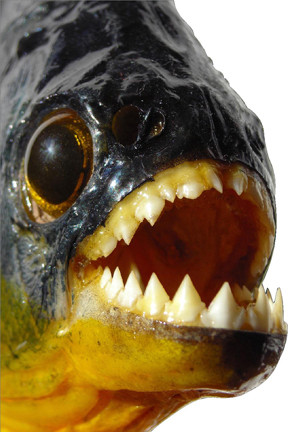
Piranha's Can Eat Human Beings Alive. Truth, or Myth?


A legend tells that Piranha's gather in groups and can strip humans to the bone alive! But piranha's are not aggressive man-eaters. They don't just hunt down prey, they defend themselves against predators. So if a piranha attacks you....it's obviously scared and is protecting itself from being harmed. If piranha's have eaten any humans, it would be a carcass that has drowned in a river. This myth of aggressive piranha's might be when "President Roosevelt visited Brazil in 1914 and saw a group of piranha's strip meat from a dead cow." But that has been set up to entertain tourists; the piranha's had been hungry for days and then went into a feeding frenzy.
I find this really interesting because i've always thought that piranha's were deadly man-eating savages! But, this website helped clear the air and I wont be that terrified of swimming in my lake.....

Purple Crab Take Over!!!

Marshlands in Cape Cod are diminishing says NSF due to purple marsh crabs. The purple crabs are eating away at the lush Marsh because their main predators, blue crab and fin-fish are being over fished, causing the population of purple marsh crabs to greatly increase. The crabs eat all the green grass of the marshes leaving just lumps of mud. The marshes are not just there for looks they serve many other purposes to the environment like they nourish many plants and other animals, filter nutrients, and are a critical storm barrier. People like Mark Burtness, marine ecologist of Brown University tie the the crabs to sticks stuck in the mud so predators can go right away and eat them as they please. He also traps blue crabs to see how many there are in an area.
Crabs are a crustacean that are covered with a thick exoskeleton and have a pair of claws and 8 legs. Crabs are found all over the world. There are fresh water and salt water crabs. All crabs live near water. They can range in size from a millimeter small to 13ft, but most are small. There are about 850 species of crabs worldwide. Crabs walk sideways not forward like most animals. Marshes are wetlands frequently or continually supplied with water, either fresh or salt water. Marshes are shallow and have a lot of grass growing. They are very nutrient filled, and support a lot of wildlife. They are found all over America.
I think this event is sad, how the marshes are being ruined, all because of fishing. If people didn't fish the purple crabs so often then this wouldn't be a problem any longer. There should be a law where you cant over fish a certain area, like post that is area shouldn't be fished until the population of all the predators come back up. I wonder if they can make a law of that.